
Key Takeaways
- Facial aging is caused by oxidative damage, repeated muscle contractions embedding expression lines, and fat redistribution that causes sagging and hollowing.
- BOTOX addresses upper face wrinkles by relaxing the muscles responsible for forehead lines, frown lines, and crow's feet every three to six months.
- Dermal fillers address the lower face and nasolabial folds, restoring volume and smoothing lines approximately every nine months.
- Laser resurfacing improves shallow wrinkles, uneven tone, and acne scarring by stimulating collagen and removing damaged surface skin.
- A regular schedule of light, combined non-surgical treatments is the key to maintaining a natural-looking, youthful appearance without surgery.
The Facial Aging Process
There are various different things that can contribute to the facial aging process but here are a few of the most prevalent ones.Oxidative Damage
Our skin is exposed to many different environmental elements, from the foods we eat, pollution and toxins in the air, UV rays from the sun, wind, rain, and any other number of other things. These all contribute to oxidative damage, also know as the production of free radicals. Free radicals are unstable cells in the body that, although we can’t see it, are actively doing damage to our health or our beauty. Eating key superfoods that provide antioxidants and nutrients can help.Facial Expressions Become Embedded
Fine lines and wrinkles become bothersome for all of us and unfortunately are part of the aging process. Frown lines, forehead furrows and crows feet are often due to repetitive folding of skin from everyday facial expressions. Over time these expressions become embedded in our face. While fine lines can be due to sun damage, smoking, and natural degeneration.Facial Fat Distribution Changes
The Harvard Health Publication explains this well:“When were young, fat in the face is evenly distributed, with some pockets here and there that plump up the forehead, temples, cheeks, and areas around the eyes and mouth. With age, that fat loses volume, clumps up, and shifts downward, so features that were formerly round may sink, and skin that was smooth and tight gets loose and sags. Meanwhile other parts of the face gain fat, particularly the lower half, so we tend to get baggy around the chin and jowly in the neck.”
Weight loss and gain can also contribute to changes in fat distribution on the face, which is why it’s important to live a healthy lifestyle and maintain a healthy weight.How To Have A Facelift Without Surgery
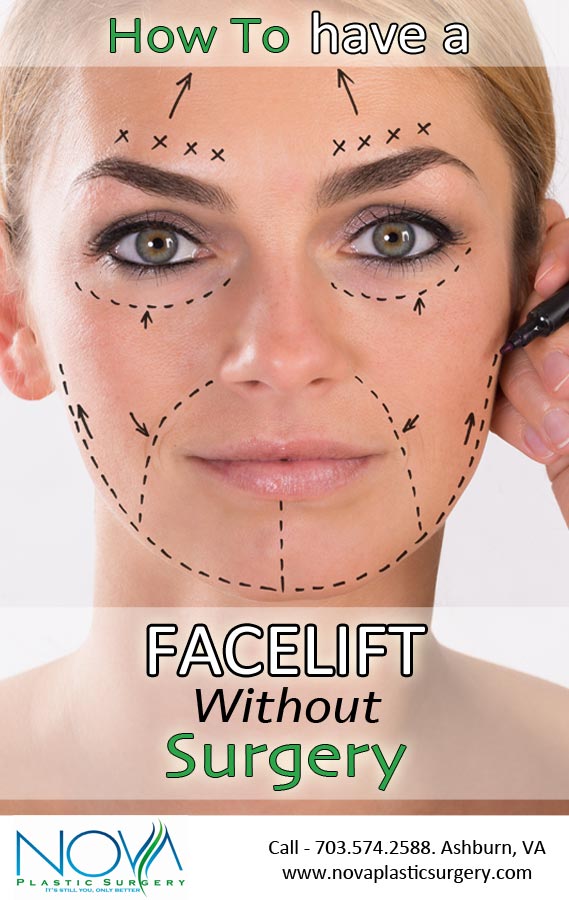 Thankfully there are things you can do to have a facelift without surgery!
Mainly there are 3 main strategies that people use, including celebrities, to get the same affect as a facelift without the surgery.
Thankfully there are things you can do to have a facelift without surgery!
Mainly there are 3 main strategies that people use, including celebrities, to get the same affect as a facelift without the surgery.
Botox
Botox injections are used to treat forehead creases, crows feet, and other wrinkles of the upper part of the face with an injection of botox. The injections freeze the muscles in the forehead or upper part of the face to decrease or prevent the visibility of wrinkles and provide a smooth even surface. As proven in this case study, botox treatments are an effective solution to facelifts and can be started early in life (around age 25 years) and used regularly for best results.Fillers
Dermal fillers are injected beneath an indentation in the skin to fill the skin out and create a smoother appearance. For a facelift without surgery you would usually combine the fillers with botox treatments where needed to get a well rounded ‘natural look.’ While botox is best for the upper part of the face, dermal fillers can be used for lower parts of the face and upper parts if necessary. Because fillers help plump up skin and fill in lines and wrinkles they are commonly used to plump up the lips and remove deep creases that run from the nose to the corners of the mouth (the nasolabial lines), and also to fill deeper creases between the eyebrows.Laser Resurfacing
The Laser Resurfacing treatment treats shallow wrinkles by causing the outer layer of skin to peel away, revealing younger, healthier skin beneath. It also encourages the growth of collagen for more supple skin and is great for treating acne scarring, warts, uneven skin tone, some birthmarks, liver spots, chickenpox scars, age spots, or other blemishes. Botox and fillers are more commonly used as a total replacement to surgery for facelifts, while things like Laser Resurfacing, HydraFacial MD treatments and Laser Peels can help refresh your skin. For example, something like the HydraFacial is a deep form of cleansing that can be used weekly, biweekly or monthly.Botox and Fillers for a ‘Natural Look’ Facelift Without Surgery
With a good balance of both botox and fillers you can sustain a ‘natural look’ facelift without surgery – just like these stunning celebrities. Molly Sims, on the left, has only had light treatments to smooth out the upper face and to slightly fill the lines running from the nose to the mouth (nasolabial lines).
Nicole Kidman, in the middle, has kept her natural looking beauty with botox injections to the upper face and fillers in the lips and nasolabial lines.
Kelly Ripa, on the right, takes a slightly more relaxed approach with just enough to give her that lift and glow.
Other celebrities that use botox and fillers that you may not know about include Naomi Watts, George Clooney (yes, guys have treatments too), Sophia Vergara, Jennifer Lopez and Amy Poehler. Jennifer Anniston has regular laser treatments. And another guy not shy to the botox and fillers is Simon Cowell.
The fact that a lot of celebrities use botox and fillers is no secret, they all want and need to maintain their natural beauty.
Molly Sims, on the left, has only had light treatments to smooth out the upper face and to slightly fill the lines running from the nose to the mouth (nasolabial lines).
Nicole Kidman, in the middle, has kept her natural looking beauty with botox injections to the upper face and fillers in the lips and nasolabial lines.
Kelly Ripa, on the right, takes a slightly more relaxed approach with just enough to give her that lift and glow.
Other celebrities that use botox and fillers that you may not know about include Naomi Watts, George Clooney (yes, guys have treatments too), Sophia Vergara, Jennifer Lopez and Amy Poehler. Jennifer Anniston has regular laser treatments. And another guy not shy to the botox and fillers is Simon Cowell.
The fact that a lot of celebrities use botox and fillers is no secret, they all want and need to maintain their natural beauty.
Regular Scheduled Treatments is the Key to a Facelift Without Surgery
The key to getting the natural look is to start early and get regular scheduled treatments. Botox injections are required every 3-6 months or 2-3 times per year. While fillers are needed every 9 months or so. What you don’t want to do is go in and have everything plumped up and smoothed out so much that it all looks unnatural and fake – we definitely wouldn’t let you leave our Medspa with a treatment like that! With a light but regular approach you can keep a natural look and still look and feel your best – without the use of invasive surgeries, without looking fake, and without having to go through drastic interventions – all the while managing your busy life. Non-invasive facial rejuvenation really is the answer!
Frequently Asked Questions
Can you really achieve facelift results without surgery?
Yes, in many cases. A consistent combination of BOTOX every three to six months and dermal fillers approximately every nine months can replicate many of the smoothing and lifting effects of a surgical facelift. The key is starting early and maintaining a regular treatment schedule.
What role does BOTOX play in a non-surgical facelift?
BOTOX addresses the upper face by temporarily relaxing the muscles responsible for forehead lines, frown lines, and crow's feet. It prevents these expression-related wrinkles from deepening over time and smooths out existing lines for a more rested and youthful appearance.
What role do dermal fillers play in a non-surgical facelift?
Dermal fillers address the lower face by restoring volume lost to aging, smoothing nasolabial folds, plumping the lips, and filling deeper creases between the eyebrows. Together with BOTOX, they create a balanced, full-face rejuvenation without the need for incisions or recovery time.
How often should non-surgical facelift treatments be repeated?
BOTOX is typically repeated every three to six months to maintain its smoothing effect. Dermal fillers generally last around nine months before a touch-up is needed. Maintaining a regular schedule of both treatments keeps results looking consistently natural.
What causes the facial aging that non-surgical treatments address?
Facial aging is driven by oxidative damage from environmental exposure, repetitive muscle contractions that embed expression lines into the skin, and the natural redistribution and loss of facial fat that causes hollowing, sagging, and the development of jowls over time.